
Mood Maker – Pleasure Enhancing Intimacy Oil Review: Why It Struggles to Deliver Real Arousal
This review of Mood Maker – Pleasure Enhancing Intimacy Oil is based on repeated use, observation, and comparison with products that actually deliver consistent results, such as Zestra. While the product promises enhanced intimacy through aphrodisiacs and adaptogens, the reality falls short for most users. This review explores the experience from packaging to application, actual effect on arousal, and overall value to help readers make an informed decision.
First Impressions: Packaging and Expectations
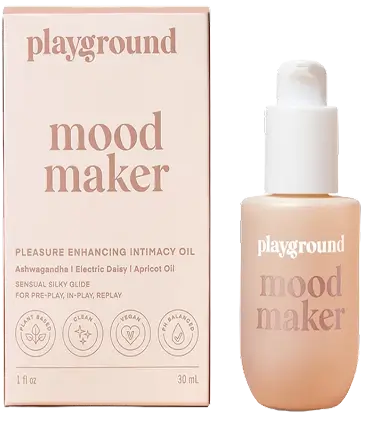
When the bottle arrived, it looked sleek and attractive. The labeling highlighted exotic scents, adaptogens, and promises of heightened pleasure. On paper, it sounded like an advanced intimacy product, and I was curious to see if the hype matched reality.
The spray bottle and oil texture felt convenient. It applied smoothly without leaving residue or a greasy feel. That was one of the few aspects that delivered on its promise. However, from the first use, it became apparent that the “enhancement” claims leaned more on feel-good language than measurable results.
Application Experience
Using Mood Maker is easy. The oil glides on the skin and has a pleasant, though subtle, scent. For individuals sensitive to fragrances, this could be a small advantage. However, the scent is not entirely neutral and could be noticeable to partners who prefer fragrance-free intimacy products.
The oil feels smooth, soft, and comfortable during application, creating the sense that something is happening. But beyond this tactile comfort, there is no noticeable arousal boost. Unlike clinically evaluated oils such as Zestra, which support natural responsiveness and sensitivity, Mood Maker does not reliably enhance physiological response or desire.
Real-World Effects on Arousal
Over multiple uses, the pattern was consistent: the oil provides mild comfort and smoothness but does not stimulate real arousal. The adaptogens and aphrodisiac ingredients may sound impressive on the label, but the effect remains superficial. The oil creates a pleasant tactile experience but does not increase blood flow, sensitivity, or sexual responsiveness in any meaningful way.
The initial tingling or warmth that some users might perceive is minimal and fades quickly. There is no cumulative effect over time, and the oil does not create a reliable baseline for spontaneous intimacy. Compared to Zestra, where arousal builds in a predictable and controllable way, Mood Maker feels inconsistent and, for most users, underwhelming.
Emotional and Sensory Experience
Mood Maker’s scent and texture may create a sense of ambiance, but ambiance alone does not equal arousal. During use, I noticed that while the massage or touch felt pleasant, it rarely translated into increased desire or engagement. The oil can support relaxation or comfort but does not fundamentally enhance sexual sensation.
This makes it more suitable as a lifestyle or massage oil rather than a functional intimacy enhancer. For users seeking a measurable boost in arousal or a product that responds to their body, Mood Maker cannot deliver that effect.
Comparison With Other Products
Compared with Zestra’s clinically evaluated oils, Mood Maker clearly falls short. Zestra works with the body to heighten natural responsiveness, while Mood Maker relies primarily on sensory feel. In a market crowded with oils that promise stimulation, Mood Maker’s effects feel ordinary and predictable, lacking the depth and reliability that define premium arousal products.
Other competitors that focus on surface sensations, such as warming or tingling, might provide temporary novelty, but they still lack the long-term, measurable impact of a clinically backed product. Mood Maker’s approach combines buzzwords with comfort, yet it does not create meaningful changes in arousal or intimacy quality.
Partner Response
During partner use, the impact was similarly underwhelming. The subtle scent and smooth texture were pleasant, but the partner could not detect any significant difference in engagement or responsiveness. For products aimed at enhancing shared intimacy, this is a critical drawback. Without mutual perception of effect, the oil’s role becomes limited to skin care rather than intimacy support.